
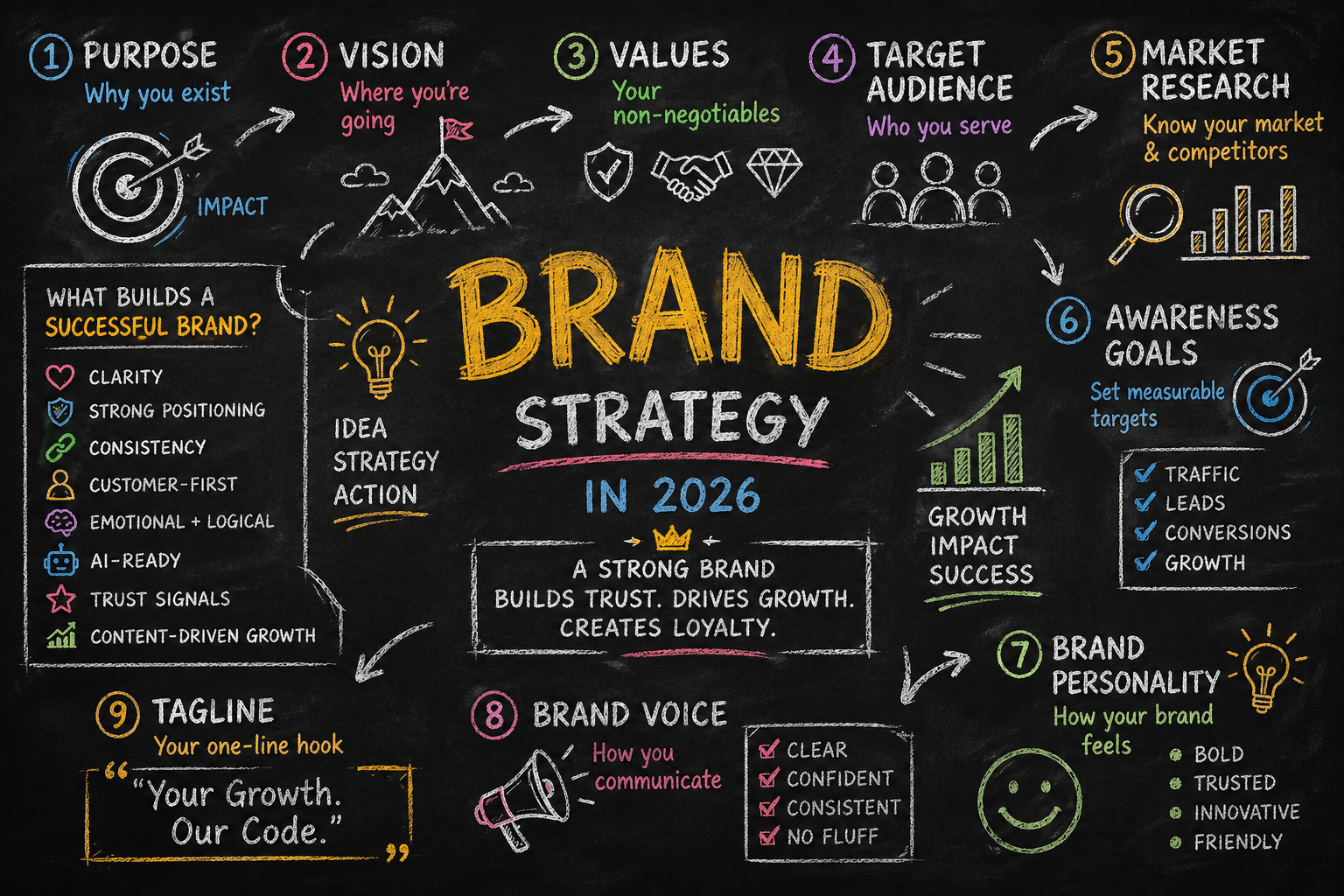
Brand Strategy in 2026: The 9-Step Framework Smart Founders Use to Build Market-Dominating Brands
🚀 If Your Brand Feels “Okay,” You’re Already Losing
Here’s the uncomfortable truth:
Most startups don’t fail because of a bad product.
They fail because nobody understands, trusts, or remembers their brand.
In 2026, attention is expensive, competition is brutal, and AI is flooding the market with noise.
If your brand is not:
- Clear
- Differentiated
- Consistent
You’re invisible.
This guide breaks down a proven 9-step brand strategy framework used by high-growth startups to build authority, attract customers, and scale faster.
🔥 What Is a Brand Strategy (And Why It Matters More Than Ever)
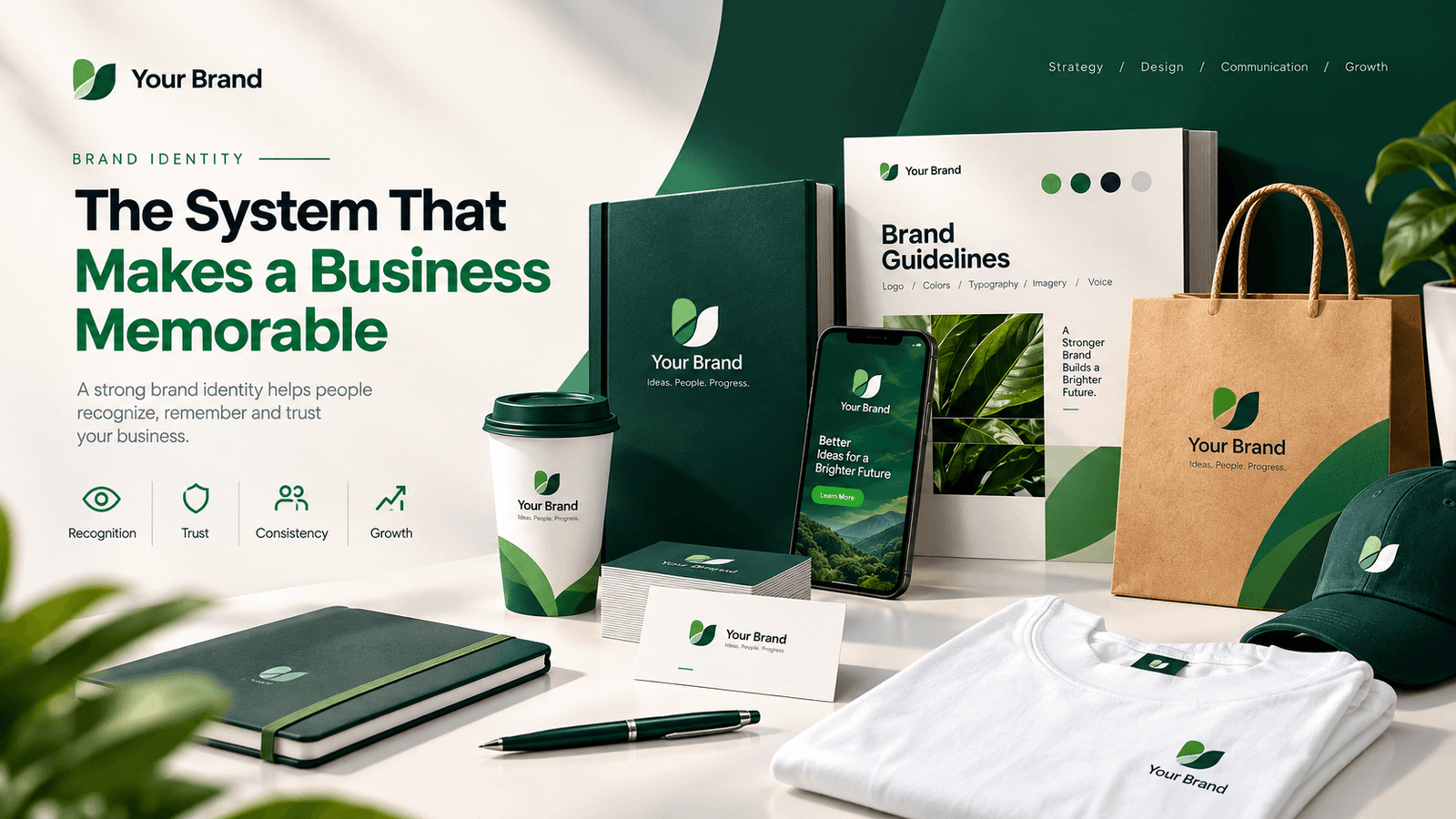
A brand strategy is not your logo, colors, or website.
It’s:
The system that defines how people perceive your business—and why they choose you over competitors.
A strong brand strategy helps you:
- Increase conversions
- Build trust instantly
- Reduce marketing costs
- Scale faster with consistency
✅ The 9-Step Brand Strategy Framework (2026 Edition)
1. Brand Purpose (Your “Why”)
Your purpose is your core reason for existing.
Not:
“We build software.”
But:
“We help businesses automate growth and scale faster using AI.”
Why it matters:
Customers connect with meaning, not features.
Pro Tip:
Make it:
- Emotional
- Outcome-driven
- Customer-focused
2. Brand Vision (Your Future Position)
Your vision defines where your brand is going.
Example:
“To become the global leader in AI-powered automation for modern businesses.”
Why it matters:
It aligns your team, content, and long-term decisions.
3. Brand Values (Your Non-Negotiables)
Values shape your brand’s behavior and trust level.
Strong examples:
- Performance-driven
- Transparency-first
- Innovation-led
- Customer obsession
Why it matters:
In a crowded market, values build loyalty and credibility.
4. Target Audience (Your Ideal Customer)
Trying to serve everyone = guaranteed failure.
Define clearly:
- Industry (SaaS, eCommerce, Agencies)
- Role (Founder, CTO, Marketer)
- Pain points
- Goals
Example:
“Startup founders struggling to scale operations without increasing team size.”
SEO Keywords:
- target audience strategy
- customer persona development
- ideal customer profile
5. Market Research (Your Competitive Edge)
This is where most founders get lazy—and lose.
Analyze:
- Competitor positioning
- Pricing models
- Customer complaints
- Market gaps
Growth Hack:
Read competitor reviews → find pain points → build your positioning around solving them.
SEO Keywords:
- competitor analysis strategy
- market research for startups
- brand positioning strategy
6. Awareness Goals (Your Growth Targets)
If you don’t measure it, you can’t scale it.
Set clear goals:
- Website traffic (e.g., 50K/month)
- Leads (e.g., 200/month)
- Conversion rate (e.g., 5–8%)
Why it matters:
Branding without metrics = guessing.
7. Brand Personality (Your Brand as a Human)
Your brand should feel like a person.
Choose 3–4 traits:
- Bold
- Professional
- Friendly
- Innovative
Example:
Confident, strategic, results-driven
Why it matters:
Personality creates connection and memorability.
8. Brand Voice (How You Communicate)
Voice = how your brand sounds across:
- Website
- Ads
- Emails
- Chatbots
- Social media
Example:
Clear. Direct. No fluff. Results-focused.
2026 Reality:
Your brand voice must work across AI agents, automation, and human interaction.
SEO Keywords:
- brand voice guidelines
- tone of voice branding
- content strategy for startups
9. Brand Tagline (Your One-Line Hook)
A strong tagline is:
- Short
- Memorable
- Benefit-driven
Examples:
- “Your Growth. Our Code.”
- “Design that works.”
Bad example:
“We provide high-quality services.”
Why it matters:
It’s your first impression in seconds.
💡 What Makes a Brand Strategy Actually Successful?
Now here’s where most brands fail—and where you win.
1. Clarity Over Complexity
If your audience doesn’t understand you instantly, they leave.
Simple messaging = higher conversions.
2. Strong Positioning
Answer this clearly:
Why should someone choose you instead of your competitors?
If you can’t answer this in one sentence, your brand is weak.
3. Consistency Across All Channels
Your:
- Website
- Social media
- Ads
- Emails
- Chatbot
Must feel like one unified brand.
4. Customer-Centric Messaging
Your brand is not about you.
It’s about:
- Their problems
- Their goals
- Their transformation
5. Emotional + Logical Balance
Winning brands combine:
- Emotion → trust, desire
- Logic → proof, results
6. AI-Ready Branding (Critical in 2026)
Modern brands must scale across:
- AI chatbots
- Automation systems
- Personalized user journeys
Your messaging must be:
- Structured
- Consistent
- Machine-readable
7. Trust Signals Everywhere
People don’t buy services—they buy trust.
Include:
- Testimonials
- Case studies
- Results
- Certifications
8. Content-Driven Growth
Your brand grows through:
- SEO blog content
- LinkedIn authority posts
- YouTube & short-form video
- Automated content systems
📈 Final Thoughts: Build a Brand That Scales Without You
A strong brand strategy is not optional anymore.
It’s your:
- Competitive advantage
- Growth engine
- Trust builder
In 2026, the brands that win are not the loudest.
They are the clearest, most consistent, and most trusted.
🚀 Ready to Build a High-Conversion Brand?
If you want:
- A complete brand strategy tailored to your business
- High-converting messaging
- SEO-driven content systems
- AI-ready brand infrastructure
👉 Let’s build it the right way.
Start now. Your competitors already are.
Share Your Thoughts
Your email won't be published. We welcome your feedback, questions, or suggestions.